Tuesday, March 15, 2016

Madame Bovary


I've been reading a lot lately but not blogging very much so I'm kind of behind.  

I read a challenge on a website at the beginning of the year to read the books your favorite author recommends.  I love, love, love Ernest Hemingway and so I went looking for a list of books he suggested.  I found this site and looked at two lists from Hemingway.  

The first book I decided to tackle was Madame Bovary.  


the adaptation is on Netflix...can't wait to check it out


I bought it on my kindle and really enjoyed having the dictionary available to me.  Looking up complicated words was easy.  The introduction was excellent and gave a deeper insight into Flaubert's world and style, but it did have some major spoilers.  

The novel is one of the first "realist" masterpieces and was considered a bit scandalous when it was published because it didn't have a moral and highlighted women behaving badly.  

Madame Bovary is about a girl named Emma who falls for a country doctor.  Though she longs to experience the world and broaden her horizons, her gender and station in life don't allow for that.  She can't seem to find joy or passion and the book follows her closely as she discovers that other men have an interest in her and her marriage slowly disintegrates.  

"But her own life was as cold as an attic with a north-facing window, and boredom, that silent spider, was spinning its web in the darkness of every corner of her heart." 

One thing I absolutely adore in classic literature is the way, when characters are well developed, we can see ourselves or others we know in various works.  There is a timelessness to the struggles that are presented.  Though I could not personally relate to Emma, I know so many people who are frustrated and looking to climb a social and economical ladder to happiness.  

"In her desire, she confused the sensual pleasures of luxury with the joys of the heart, elegance of manner with delicacy of feeling."

I actually wasn't very fond of Emma.  She was always dissatisfied with what she had.  However, I did feel a sense of pity for her because of the straight-jacket of womanhood.  Reading this book I realized how far women have come in their fight for equality (and how far we still have to go).  Though I'm not sure Flaubert intended this as a feminist novel, the themes of Emma being trapped primarily because of her sex make it almost a call to action to right the wrong of inequality.  

"She longed to strike out at all men, spit in their faces, crush every one of them; and she walked rapidly straight on, pale, trembling, enraged, searching the empty horizon with tearful eyes, as though reveling in the hatred that was suffocating her."

As a modern woman, I can't imagine being confined to live at the whim of men and say good bye to my husband each day only to anticipate nothing more than an existence of cooking and cleaning while he is educated and contributing to society.  Emma finds joy in books but her mother-in-law and priest agree that they are the cause for her discontentment and make sure she puts such frivolous things away.  That is just cruel.  I would lose my mind, too.  

Flaubert doesn't offer a happy ending or solution to Emma's struggle.  He just states it, for the reader to contemplate.  This is what makes it realism.  His descriptions are often beautiful and mundane.  The places that Emma lives and visits are the same places that Flaubert lived and visited, and when he describes them it's obvious.  He tells you about the details of the streets and the sounds and the smells just as if you are on a tour.  

I'm so glad I finally checked this one off my list (it's been there since college).  I can definitely see how it impacted Hemingway and many others who came after Flaubert.  Overall, it was dark but truthful, and I understand why it is called a masterpiece.  

Thursday, January 21, 2016

The Other Typist

Years ago, I was experimenting with reading on a kindle.  I had read one novel and chose another light novel to read on the device.  A friend had rated it highly on goodreads and I thought it looked like something that struck the balance of a book I kind of wanted to read and a book I didn't really want to buy.

I gave up kindle reading in favor of physical books right after that purchase.  The old technology didn't lend itself well to highlighting or flipping around.  It was clunky and I didn't like it.  

Then, we were visiting my parents' house for Thanksgiving this year.  I, dutifully, have the kindle app on my phone, like any good book lover would.  Just in case.  And, while we were away, I wanted to stay up and read a bit but forgot my book light.  I pulled out my phone to see what books were loaded on my app and found The Other Typist.  

Perfect, I thought.  A book I wasn't terribly invested in but curious about and a book I could read in the dark while my husband slept.  

And you know what?  It was perfect.  I got invested in the book on that trip so I started reading it regularly on my phone.  Naturally, my husband and kids made fun of me reading a novel on such a small screen, but I didn't care.  I wanted to finish and I loved the way it kept track of how much time you had left and what percentage I had finished.  

With Christmas coming, I added a kindle to my wish list.  My husband looked at me exasperated, "I already got your gift.  It's only a few days until Christmas."  I promised I really didn't want one and with my birthday coming in February I could just get a kindle then.  

However, on Christmas morning I was surprised to find a kindle under the tree.  My kids had heard my wish and used their allowances to get it for me (this made it even better).  

They got me the paper-white model which is the one I wanted.  Not too fancy.  Just reading.  I didn't want to have to swipe it away from my five year old every ten minutes like a phone or ipad.  


I finished The Other Typist on the kindle.  I love it (the kindle), though I will still read and buy physical books.  I don't think I could ever switch permanently.  It is nice to have the built in dictionary, the stats that challenge you to read more, and the portability, but you just can't beat the new book smell that makes me so happy.  

Because of this story, I will always have a fond place in my heart for The Other Typist.  It's not fabulous Literature, but it was a fine story about a young woman who gets mixed up in some shady business in 1920's NYC.  

There were moments of frustration because Rose seems so dumb and unaware.  At times I wanted to shake her.  She works as a typist in a police department and a handsome, young Lieutenant Detective clearly likes her, but she is rude and cold to him, thinking he likes her shady friend, Odalie.  

This is the kind of book where I don't want to give away too much, but I will say, that some of Rose's dimwittedness could be from her condition at the end of the book, as she is retelling this story.  We are supposed to have an unreliable narrator so at the conclusion we question some of the events and impressions in her narrative.  

This book would make a good vacation read.  It doesn't require a lot of thought or focus and is mainly plot driven.  It's not depressing (thank goodness!) but it does deal with the implosion of a few of it's characters.  You may find yourself reaching for a dictionary, though.  The author put words in that seem to show-off an extensive vocabulary.  At first it was annoying and then I thought it was kind of funny in an unnecessary sort of way.  

Give it a try next time you are away and looking for an engaging mystery.  


Saturday, January 9, 2016

Reading Challenges

I'm 9 days late, but Happy New Year!

these cats know how to par-tay

As a book blogger, and just generally someone who loves books and reading, I've noticed the increasing popularity of reading challenges on other book blogs.  

I did one last year and found it fun to try to fit my books into the categories or to pick books based on the prompts.  It stretched me and helped me be intentional about my reading choices.  And, as I've said many times, I read more when I have a deadline and direction.  

This year, I'm participating in two.  One here and another one here.  I thought about pulling together my own but I don't think I'm quite ready for that...next year I might give it a try, though.  

I did pick a stack of books that I'm going to try to read this year:
and...drum roll please....

I'm looking forward to challenging year to grow as a reader and writer.  And, I'm looking forward to reading some things I've always meant to read.  

Do you have a list that you want to accomplish for 2016?  

Friday, January 8, 2016

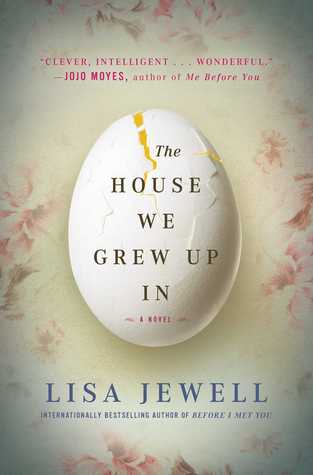
The House We Grew Up In and Book Clubs

Have we talked about book clubs?  Are you in one?  Do you love 'em or hate 'em?  


I am in a book club and have been in a few over the years.  Ranging from clubs organized by Barnes and Noble to groups of neighbors or friends, book clubs can be a way to meet new people, talk about books, and just get out and eat and drink without your kids.  Wine is often a must at these things.  

Book clubs always seem like a good idea to me.  However, I often am frustrated by being "forced" to read a book that was not even on my radar, let alone my To Be Read list.  But, usually I'm happy after I get pushed out of my comfort zone for a few months.  It opens my eyes to all the other books I would just be happy to ignore.  And, there is something really motivating about reading with a deadline.  

This month, my book club picked The House We Grew Up In by Lisa Jewell.  We run a system that whoever is hosting book club gets the privilege of picking the book we all read.  The friend who picked this book said that it was recommended to her by a friend of a friend.  High praise, indeed.


Jewell recounts the saga of a family from a small town in England.  She uses flashbacks and flashforwards to reveal bits and pieces of what happened to the parents and four children in the Bird family, all taking place on various Easters.  

I was intrigued by the cover.  The cracked egg hints at the destruction of a safe place.  But I had no idea how bad it would get.  

This book is well rated on both Amazon and GoodReads and honestly, I was surprised by this.  

I'm a fan of complicated stories with dark twists and turns (that's often how real life goes).  I don't need a saccharine tale, but this was a bit over the top.  It was like nothing good happened for the first 3/4 of the book.  Something bad happened and then something worse and then it got even more strange and upsetting.  I didn't cry despite all the sad/difficult situations...I didn't feel a particular affinity to any of the characters.

It seems like much of teen fiction is dystopian and much of pop fiction is train wrecks.  the more popular books I read the more I wonder why we are eating up these bad stories.  In classic fiction, there are many hardships and deaths and war but somehow there is hope or human perseverance that makes them beautiful.  Modern fiction seems to be centered on cautionary tales ("don't become a hoarder, or else...") or something that is a stark contrast to most people's lives so we can say, "Ah, thank goodness my life isn't that bad!"  I just can't seem to get on board with this trend.  

Ultimately, if I were looking for some shred of hope in this book it would have come just past page 300:
"'This is real life.  And things sometimes happen that don't fit in with how we think the story should go, but we just have to take a deep breath and get on with it, not sit there sulking because it's not what we were hoping for.  Come on!'"
It's true, but it's not really well done.  And, I don't know how "real" the life described in this book is for most families.  Sure, everyone has a few stories and some hurts and some hardships, but this reads like a Jerry Springer-esqe family memoir.  

Jewell did a great job of describing England and I loved the setting and descriptions that she wrote.  This novel would have been impossible without this, because the mother is a hoarder and her condition gets gradually worse throughout the book.  I really felt the walls closing in on me and the clutter of the house because of the way their home was described.  The book made me curious about the hoarding condition and made me reevaluate my book buying tendencies because if I were going to hoard anything, it would certainly be books.

If you're looking for a strange and kind of dark book, this one may fit the bill.  If you're interested in life with a hoarder you should give it a shot.  

Next up I'm reading Madame Bovary and A Prayer For Owen Meany.  What are you reading?  


Tuesday, December 22, 2015

We Are Called To Rise

I don't know about you, but I love reading books about places and cultures and ideas that I have a frame of reference for.  I recently loaned a friend a book for a trip.  She is a doctor and a few of the books I picked had a medical theme.  She flat out refused anything even a little medical.  This shocked me because surely everyone has the same reading tastes as me.  Apparently not.  

We are Called to Rise by Laura McBride appealed to me because it is about Las Vegas and McBride is from Vegas.  My husband lived in Vegas for most of his youth and his parents still live there.  We go to Vegas once or twice a year, so over the course of our 14 year marriage I have spent a bit of time there.  


My husband read The Goldfinch this year but didn't recommend it.  He felt the portrayal of Las Vegas was something you might see in a movie, not nuanced, and certainly not something a local could relate to.  He hasn't read this yet, but I feel confident that he will love the way the city is portrayed.

Las Vegas is complex, with many different parts and a diverse population.  The landscape is unique and can be both beautiful and problematic.  It's a city driven by tourism, but it's also where people live and raise their families a few miles from the buzzing strip.  This book captures the real lives of Las Vegas residents well.  

The plot is complicated and I don't want to give away too much, but basically, four different lives come together randomly.  They become intertwined in very real and meaningful ways because of a series of events that pulls them together. The way they are all pulled together accentuates the small town nature of Las Vegas and the initial differences in the characters and the places they come from highlight the town's big city feel and varied people groups.  

The theme of the random nature of life, of little choices culminating in earthquakes, is repeated often in the novel.  Some characters even outright identify it.  One character in particular, Avis, laments it so frequently it gets a bit annoying.  She even thinks through lists of sudden tragedies ("the harried mother who forgets her baby in a hot car, the exuberant teenager who leaps into a too-shallow lake, the young driver who doesn't see the child chasing a ball.") a few times in the book and it loses some of it's meaning after her first list.  The author didn't need to point to it so directly.  But it is true, "that so little matters so much, and so much matters so little."  

Also, there were some awkward sentence structures..."And it still all mattered."  It seems nitpicky but this was the last sentence of the chapter and I had to read it twice to be sure I got it.  There were a few times when I caught myself rereading and reworking the sentences.  

Aside from the minor problems I had with it, I really loved the characterization (I was weeping at the end because I loved the characters so much) and the way McBride really drew on the setting to add a deeper dimension and make her story really come alive.  The way she describes emotional things is empathetic and resonated with experience.  It was a sad book, but not depressing.  It made me think and gave me a greater appreciation for the things in my life.  I would say it was a successful book, worth the read.  

I'm currently reading The Other Typist and The House We Grew Up In.  Both are eerie.  I'm not sure I love either one, but I'll let you know soon!

Saturday, December 5, 2015

Kitchens of the Great Midwest

I picked this book for book club.  Barnes and Noble had a table of new releases to check out.  I liked the cover, and, after reading the dust jacket, figured this would be a light, fun read.


Lars has a passion for food that he passes onto his daughter, Eva.  Through various difficult circumstances, Eva grows into a chef extraordinaire.  Along the way, she meets a cast of characters who help shape her experience.  The story is told in a series of vignettes about Eva and the people she meets, even peripherally.  The culmination of the book is a meaningful dinner hosted by Eva for some of the people who have impacted her.

I wouldn't call this light or fun looking back, but it was a solid novel that made me think.  The beginning was tricky to get into.  I felt like the dialogue was off and even the experience of new parenthood seemed like it was written for a movie or sitcom, not really true to life.  The author finds his rhythm later, though, so it wasn't a deal breaker.

The author weaves a complicated web of people.  In one chapter, a character is mentioned as a roommate's sister and later that character resurfaces again in another capacity.  It had the small town feel that is very mid-west.  This technique kept me engaged and paying attention to all of the characters, not just the most prominent.

I wasn't a fan of the ending.  It felt inauthentic and unfinished.  I didn't need a pretty bow to tie it up but there were many loose threads that were just left hanging.

Throughout  Kitchens of the Great Midwest  Stradal pokes fun at the foodie culture.  I was really struck by the idea that everyone has their own idea of what elevated cuisine looks like.  For one character, buying corn that was only hours old made dinner miraculous, and for another character mixing a cheap margarita was divine.  It had me thinking about what foods I love and how food shapes us and brings us together or separates.

There are a few recipes in the book, some more complex than others.  For our book club I made Pat's bars and they were a big hit (I even used fancy butter).  It's such a cool feeling when something from a book becomes tangible.

Definitely worth checking out, though I wouldn't rush to read it.


Tuesday, November 10, 2015

For Whom the Bell Tolls

Wowowowowowow!  

This book was phenomenal--nuanced and graceful, understated and economical and yet full of meaning.  

My husband was reading this and suggested I give it a go since we both like Hemingway's style.  

For Whom the Bell Tolls is about an American fighting in Spain's civil war.  I was a little hesitant to pick it up because it is a war novel and usually those are not my favorite.  They certainly aren't light fare and I wasn't sure after a year reading Shogun and David Copperfield that I wanted more depth.  But I'm so glad I read it now.

reading in a comfy chair at the library is my fave.  
I was recently thinking about how reading books at different points in your life make you focus on different characters and situations.  In this book there are two main couples:  Pablo and Pilar and Robert and Maria.  While Robert is the main character and voice of the novel, Pablo and Pilar caught my attention.  They had been together for years and they spoke to each other in ways that reminded me of me and my husband.  There was so much subtle humor and feeling and intelligence from Pablo and Pilar that I think I would have missed if I read it in college.  

These thoughts made me consider how different I would view so many books that I loved as a younger reader.  And it definitely points me in the direction of rereading some of those books and rethinking some of my prior conclusions...

In this book the idea of language is central.  At times, it seems that Hemingway translated the dialogue from Spanish to English.  He uses the formal thee or thou to show respect (or mock respect). 

There were some moments of great insight into unusual things for a war novel like hospitality and ugliness and beauty.  There were some parts that made me laugh out loud.  Of course, because it is Hemingway, there were many references to drinking and of course absinthe made a few appearances as well.  

I've heard Austen novels compared to the movements in a waltz.  For Whom the Bell Tolls also felt like a dance with repetitive motions and a well designed plot.  The end came fully around to the beginning.  

To be honest, at the beginning I wasn't sure I would relate much to this book about a young solider falling in love for the first time and trying to blow up a bridge.  But, there were many moments that resonated with me.  One beautiful moment, when Robert is getting ready to begin the attack, there is this reflection that perfectly captures the pressure that I often feel as a mom of four kids:

"This was the greatest gift that he had, the talent that fitted him for war; that ability not to ignore but to despise whatever bad ending there could be.  This quality was destroyed by too much responsibility for others or the necessity of undertaking something ill planned or badly conceived.  For in such things the bad ending, failure, could not be ignored.  It was not simply a possibility of harm to one's self, which could be ignored."

When I didn't have the responsibility of kids I could live a bit more recklessly and I didn't worry about failure.  With kids, I feel the gravity of their futures and I don't want to mess that up.  And it's stressful.  But worth it.  

If you're looking for a great book to end the year with, this is it.